Showing posts with label Movie Review. Show all posts

Friday, December 3, 2021

The Dangerous Lives of Altar Boys (2002)

    During the many times I have scrolled endlessly through Prime's video catalog looking for something to watch, I kept coming across this movie. It struck my interest as a low budget early 2000s flick which I've been into and I would leave the movie highlighted for a moment and contemplate, but ultimately decided it wasn't what I was in the mood for. Last night I finally took the plunge (so to say) and while it was not at all what I thought it was, I was pleasantly surprised. 


    The Dangerous Lives of Altar Boys is a coming of age film set in the 1970's (funnily enough a fact I did not realize until halfway through the movie because I simply thought the characters had all this old stuff due to them living in some kind of run down small town) that stars Kieran Culkin, Emile Hirsch, and Jenna Malone. It's actually based off a book of the same name by the late Chris Fuhrman. 
  
   The film centers around Emile Hirsch's character, Francis Doyle, as he manages his relationships with both his best friend, Tim (Kieran Culkin), and his newfound love interest, Margie Flynn (Jenna Malone). All three characters attend Catholic school where the strict and hated Sister Assumpta (played by Jodie Foster) teaches. As a result, the boys' plan and execute several pranks that increase in severity.  Running throughout the film is a comic book the boys are working on, titled "The Atomic Trinity." and there are animated sequences involving the aforementioned Atomic Trinity spliced in that run parallel to the problems in the boys' lives. Sister Assumpta makes an appearance as the villain of the story, accompanied by other evil motorcycle riding nuns. 

    As I already said, the film was not what I thought it would be, but I thoroughly enjoyed it. First off, the acting was pretty decent —it really captured the awkwardness/emotional volatility of being a young teen. Specifically, I wanted to point out Emile Hirsch. While I noticed he did the whole mouth slightly open thing that kind of annoys me in a lot of actors, he really impressed me in a few particular scenes.
     The storyline, while a little scattered and random, was interesting. I don't necessarily think this film even needed a cohesive narrative structure to work. It also deals with some dark topics which Roger Ebert seemed to think it couldn't support, but I have to disagree with him. 
    These topics aren't really supposed to be handled properly or with the weight they should be given because they are being seen through the lens of a young boy. In fact, I think the reactions to these topics from the perspectives of the characters is something the film does well. Reflecting on my own middle school experience, it all seemed very realistic. 

    This being said, it isn't a perfect film. One of my main problems with it would be this one specific storyline about a ghost that kind of goes nowhere and serves no real purpose. There's also some pretty obvious foreshadowing regarding the main climactic event at the end of the movie. I can't decide whether I liked it or not because it was only in retrospect that I realized what these seemingly random scenes and dialogue were trying to do (I guess that's literally the point of foreshadowing but it felt like something I should've probably picked up on). There's one specific scene that didn't really seem to fit with the whole narrative flow that only made sense after I was finished watching. I think that it maybe could have had a better lead in or something.  

    Even with its faults, The Dangerous Lives of Altar Boys is a competent coming of age film and is definitely worth a watch. I highly recommend it. 

Tuesday, November 30, 2021

Manic (2001)

     Before doing the staple manic pixie dream girl movie, 500 Days of Summer, Joseph Gordan Levitt and Zooey Deschanel acted together in the lesser known Manic (2001).
  Having now watched both films, I can safely say I much preferred the latter. In my opinion, 500 Days of Summer did not properly get its whole subversion of the manic pixie dream girl trope across as effectively as it was obviously trying to, and ends up falling  victim to the very trope it was attempting to comment on. 
But, I am not here today to write about 500 Days of Summer.


    Manic is a film directed by Jordan Melamed  that follows its main character, Lyle, as he is admitted to a juvenile mental institution after severely beating up a guy at a baseball game with a bat. He meets the band of other institutionalized teens with whom relationships form and drama ensues. It's shot in a very up close and personal way with what looks like a handheld camcorder. There are a lot of extreme close up shots of the characters faces and a lot of shaky camera work that accompanies the many fight scenes. I'm a fan of the cinematography because I really think it suits the rawness of the film and what it's trying to portray. 
    The extreme close-ups add to the feeling of confusion surrounding the institution and characters. The handheld camera makes it feel like a documentary; as if this situation it actually happening. Even the dialogue adds to the oppressive realism. 
    Speaking of dialogue, there are some standout performances from really the whole cast. 
Anyways, to wrap up this short review, I recommend you watch this movie and I would rate it an 7.5/10. 
 

Friday, November 19, 2021

Inherent Vice - The Movie vs. the Book

     In the past 24 hours, I've both finished Thomas Pynchon's Inherent Vice and watched the Paul Anderson film adaptation. The movie features quite the cast: Joaquin Phoenix, Josh Brolin, Reese Witherspoon, and Martin Short to name a few. Despite the many accolades those involved received, I was a little underwhelmed.  
Before diving into the movie, I'll talk a little about the the book. 

Written in 2009, Inherent Vice is the second most recent publication by the elusive Pynchon. While it is not as surreal/"postmodern" as his other works (or at least the one other book of his I read), the plot is still quite convoluted and I won't pretend I didn't got lost trying to figure out what was going on. 
This being said, I think I eventually understood everything by the time I got to the end. 


In my opinion, where the movie failed was pulling everything together. Obviously, cuts to the original story had to be made for runtime's sake (and it still ended up a whopping 2hrs. 20 mins. and some change), however if I had not had the context of the book, I don't know if I would have followed what was happening.
For instance, they cut the whole Trillium plotline which I think helped for understanding of Puck Beaverton, and they cut Fritz's character besides an offhanded comment by Adrian Prussia in regards to where he knew Doc from. 
I could also see how the narration would be confusing given that Sortilege is not properly introduced. Our first time seeing her is in the flashback scene and it wouldn't be obvious to a fresh viewer that the narrator and this woman are the same person.

Another problem I had with the movie was the internal structure time. The movie could've definitely benefitted from some quicker cuts. It would've worked better if it was edited more so to go with the goofiness/surreality of the content.
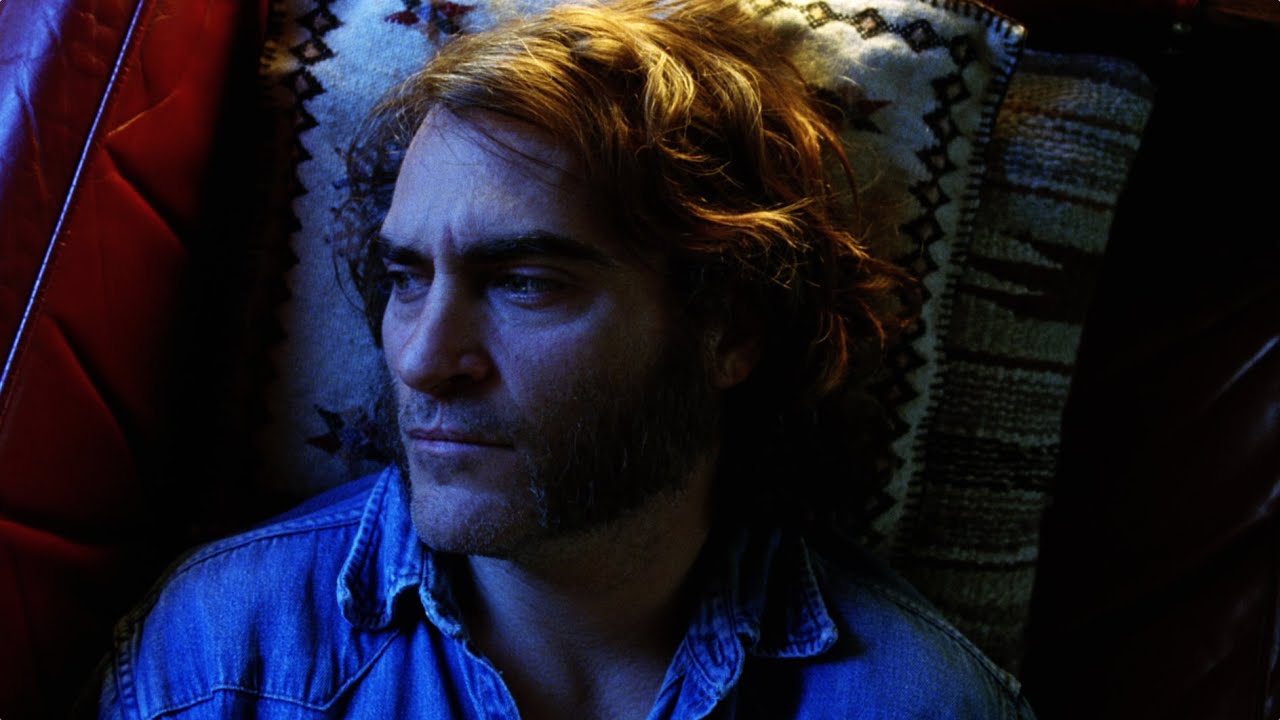
Along these lines the film was a little too washed out when a more vibrant/psychedelic color pallet would've matched the theme. 
As an example of what I mean, the picture above is a scene from the movie. Based on the trailer, I thought the entire movie would look like this with the contrasts/colorful lighting. However, most of the shots are colored like the picture below:

It's a very bland color palate if you see what I'm saying. I suppose this critique could be a little nitpicky and I am very far from being a film expert, it was something I noticed while watching. 

In summation, I don't necessarily think Inherent Vice was a bad source material to adapt. The story has some elements that I think play out interestingly on the screen but this movie didn't quite hit the mark. 


Friday, November 12, 2021

Jacobs Ladder (1990)

Lately, I've been watching a lot of movies that in some way make one question reality, which really hasn't been good for my ongoing existential crisis. Donnie Darko (2001), American Psycho (2000), and Inception (2010) just to name a few.  Jacob's Ladder (1990) continues this theme of "Did any of that just happen?" It's hard to pin down in a certain category, but I would describe it as a surreal horror government paranoia thriller. 

    Jacob's Ladder follows the lead character, Jacob Singer, as he begins having strange 'Nam flashbacks and seeing weird hallucinations of faceless humanoid beings that are following him. Before I start my review and spoil it, I'll recommend you watch it if you haven't already. It's a trippy dream-like experience dealing with hell and death and all that fun stuff. 


SPOILERS:

Like Donnie Darko, this film kind of ends where it begins. While it may not deal with all the metaphysical dimensional stuff, the principle remains the same. A man seemingly escapes death, has these weird hallucinations, and ends up back at the moment he supposedly "survived" only to die. 

The design of Jacob's Ladder is genuinely horrifying and uncomfortable and it's interesting because a lot of it relies on not showing the viewer the full scope of what's going on/uncanny valley. In the party scene, where Jacobs begins seeing all these creatures, the strobe light makes it so you can only ever see snatches of what's happening. It makes everything feel very desperate as Jacob watches in horror while Jezzie dances up on some kind of winged demon and a horn erupts from her mouth. 
Another great example of the subtle horror the film does so well was the scene with the nurse where her hat falls off to reveal some kind of filed down horn. 
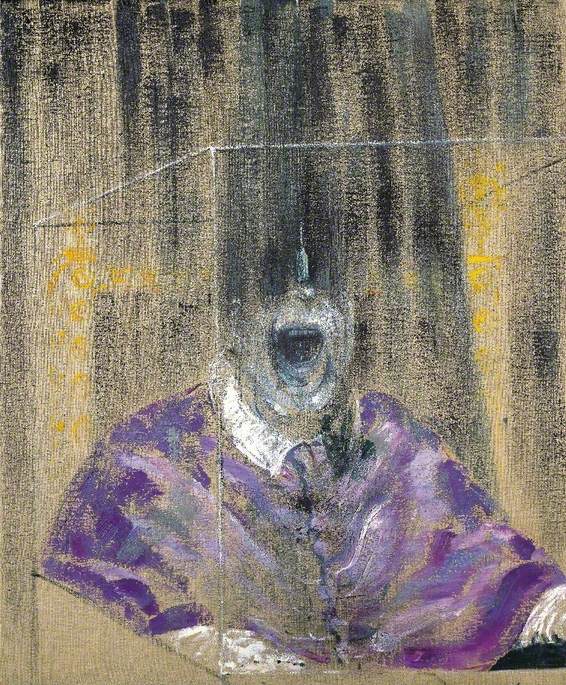
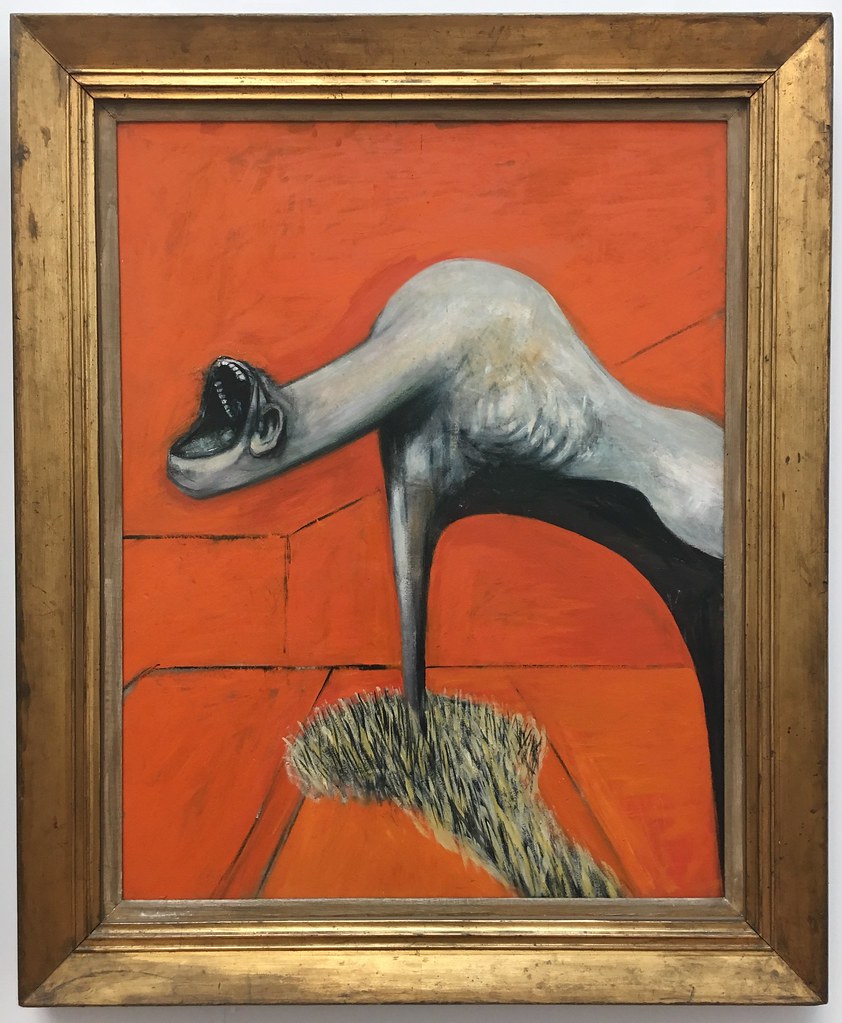
The director, Adrian Lyne, also referenced Francis Bacon as an inspiration for the "look" of the film which is apparent in the blurry heads and grotesque figures Jacob sees.

The dance scene kind of brings up all the biblical allusions that Jacob's Ladder is choc full of. I won't go into too much detail, but I will mention the quote from Louie (the chiropractor) that I found intriguing. 
He says,  "If you're afraid of dying, and you're holdin' on, you'll see devils tearin' your life away. But if you've made your peace, then the devils are really angels, freein' you from the world. It all depends on how you look at it."

Anyways, to wrap up I'm just gonna say that Jacob's Ladder is a solid film and I'd give it an 8.5/10.